I don't think it's in your head. I think nobody's looked properly.
There's a version of this where you're difficult, anxious, and a little obsessed with your own symptoms. I've read that version in a lot of charts. It's almost never the true one.
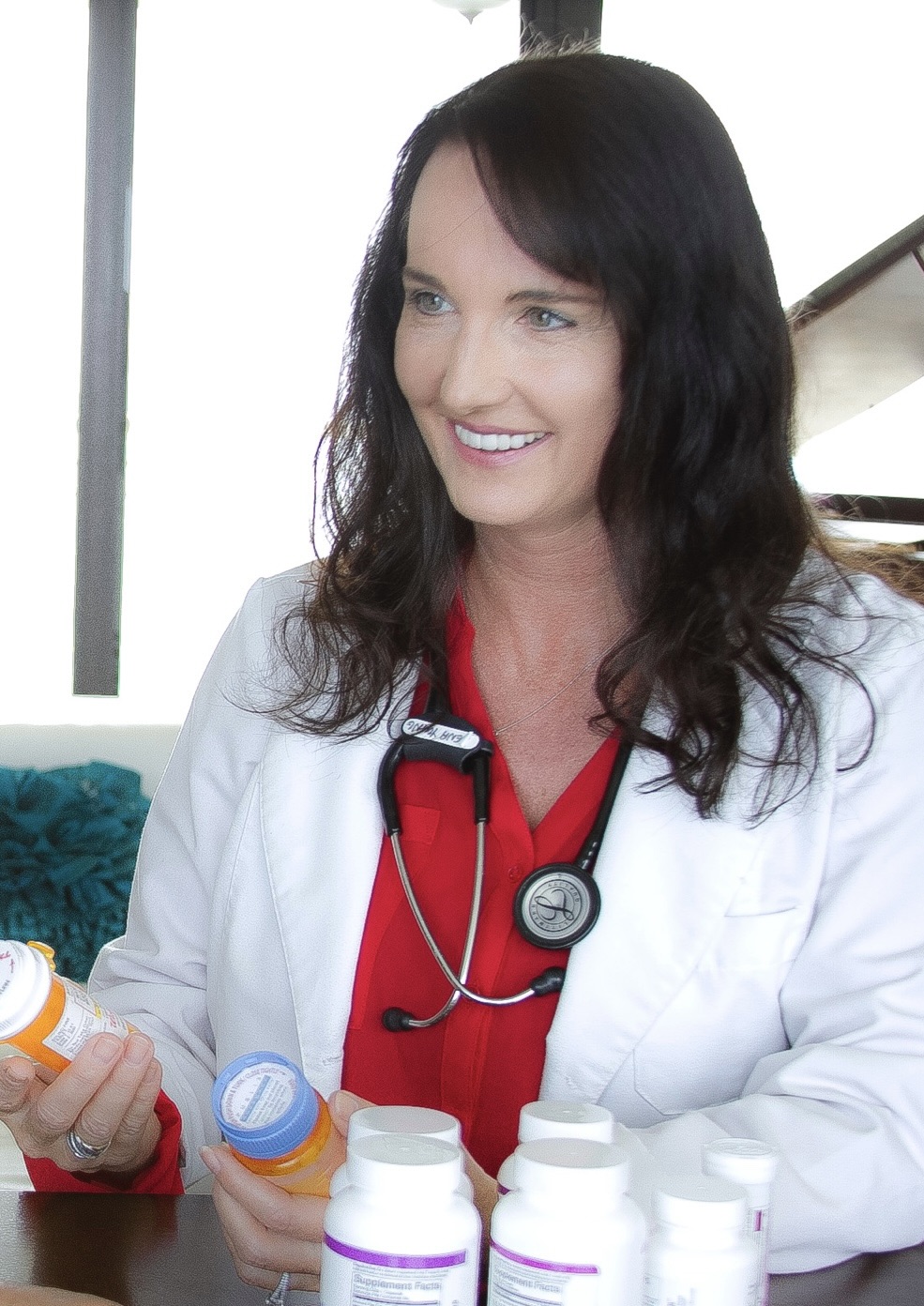
I came to this through nursing — and honestly, through my grandmother's garden.
I grew up in a small town in the Czech Republic, where my parents and grandparents grew fruits, vegetables, and herbs, and made their own remedies. When someone got sick, we reached for something homemade before we reached for a doctor, and most of the time it was enough. I didn't know it then, but I was learning the first principle of everything I do now: that the body, given the right support, is built to heal. We ate what we grew, gathered medicinal plants, and treated most of what came our way at home. A doctor was the exception, not the reflex.
I came to the United States at twenty-four, barely speaking English, and became a registered nurse — eventually a charge nurse on a Progressive Care Unit at a stroke and trauma center. And here is what that gave me, which matters far more than it sounds like it should: nurses are trained to be in the room. Not for twelve minutes — for hours. You learn very quickly that the person in the bed usually knows something is wrong long before the chart agrees with them, and that the gap between those two things is exactly where people get lost.
I saw the very best of what modern medicine can do in a crisis. I also saw, over and over, that once the crisis passed, we had almost nothing to offer the person whose real problem was slow, chronic, and building for years underneath. We managed symptoms brilliantly and asked "why" almost never.
The moment it became personal was my own son. He was two, had just started daycare, and the ear infections started — and with them, round after round of antibiotics. I knew that wasn't an answer. I looked into it, tried a simple herbal remedy, and he never needed another round. That was the whole thing in miniature: look for the cause, support the body, and often you don't need the heavy intervention at all.
So I went looking for the training that would let me actually answer the question instead of just documenting it. I spent nine years becoming a nurse practitioner and earned my Master's summa cum laude, then trained in functional and integrative medicine — functional diagnostics, hormone optimization, bioidentical hormones, IV nutrition, detoxification. In other words, learning to read a lab panel as a map rather than a pass/fail test. It was the training that finally let me practice the way that garden had taught me to think. Today I don't only use these methods with my own patients; I teach them to other clinicians, through seminars and fellowships.
Seventeen years and thousands of patients later, the thing I believed as a nurse has only gotten more true: almost nobody is imagining it. They have simply never had anyone with enough time, and enough curiosity, to keep asking why.
That's the whole practice. I kept the time, and I kept the curiosity, and I built everything else around protecting them.
I still live by all of it. My husband and I keep a small ranch here in Florida with far too many animals and a food forest I've been building one plant at a time. It's where I recharge — and a daily reminder of the thing I most want for you: that real health isn't something you manage. It's something you get to live.
It isn't a philosophy. It's asking why one more time than the last person did.
Everyone in wellness says "root cause." Almost nobody shows you what it looks like. Here's the same patient, walked all the way down.
"I'm exhausted, I can't lose weight, and I can't think straight by 2pm."
TSH comes back at 3.9. Inside the conventional range. "Your thyroid is fine." Appointment over. Maybe a prescription for the fatigue.
Free T3 sits at the bottom of range. Reverse T3 is elevated. So you are making thyroid hormone — your body is converting it down the wrong pathway. A lone TSH could never have shown that.
Ferritin is 18. Morning cortisol is flat. Two of the things that push conversion the wrong way — and both of them are invisible on a standard panel.
Iron has been low for years despite eating well, and you haven't slept properly since [ the thing that happened ]. Now we're somewhere real.
Not "your thyroid." Not "your age." Not "stress" as a shrug. Something upstream, specific, fixable — and completely invisible to the test that told you that you were fine.
That's four questions past where your last appointment ended. Those four questions are the entire job.
An illustration of how the reasoning works — not a diagnosis, and not a comment on your results.Six things, and I'll hold to all of them.
-
"Normal" is not the same as optimal.
A reference range describes the middle of everyone who happened to get tested. It was never a description of health, and it was never meant to be a goal.
-
Symptoms are information, not the problem.
Silencing a symptom without understanding it is a decision to stop looking. Sometimes that's the right call. It shouldn't be the first one.
-
You've been living in your body. I've only read the labs.
Both of those matter, and the second one is useless without the first. If what I'm seeing doesn't match what you're feeling, you're not wrong — I'm not finished.
-
I'd rather tell you I don't know.
You've had years of confident answers that turned out to be wrong. I'm not adding to the pile. If I don't know yet, I'll say so, and then I'll go find out.
-
Fewer medications, where that's genuinely safer.
If I can take you off something safely, I will. If you need it, I'll tell you that too — and I'll say so plainly rather than implying it's a moral failure.
-
Nothing I recommend requires you to buy anything from me.
I'll tell you exactly what I'd want you on and why. Where you get it is your business. Advice you have to purchase to receive isn't advice.
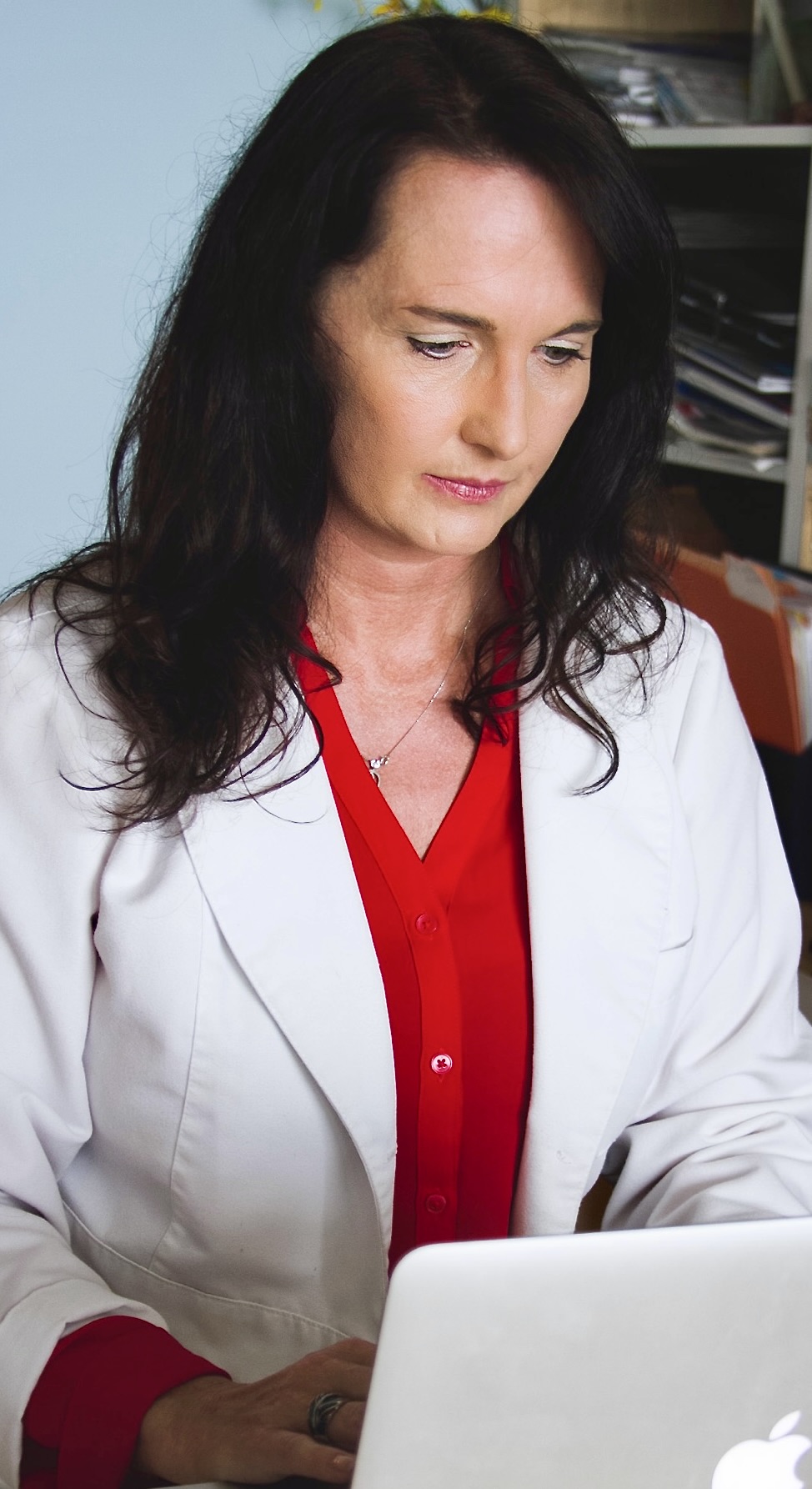
Irena Y. Ghen, MSN, APRN-BC
None of this is why you should trust me. It's just what makes the rest of it possible.
- Board-certified family nurse practitioner Licensed in Florida. Master of Science in Nursing.
- 17+ years of experience in direct patient care Thousands of patients, and the same question asked every time.
- Trained in functional and integrative medicine by leaders in the field Functional diagnostics, hormone optimization, and advanced therapeutics.
- I teach this to other clinicians Seminars, fellowships, and an accredited university-level course for physicians and nurse practitioners learning to practise root-cause medicine.
- Health product development and consulting Which mostly means I've read the research behind what I recommend, and I know what isn't worth your money.
If any of that sounded like the conversation you've been trying to have —
— then start with the call. Forty-five minutes, $200, and an honest read on what's driving this. If I'm not the right person, I'll tell you that, and you'll still leave knowing more than you did.